Invitation(& Rejection)
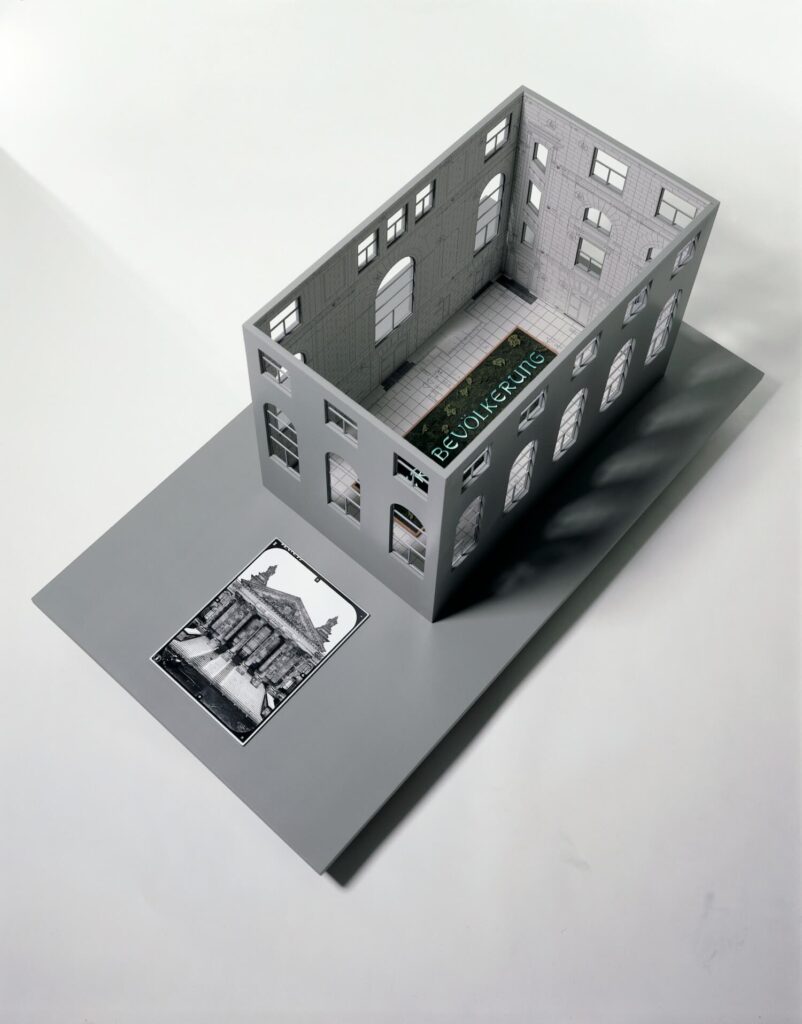
Hans Haacke was invited to develop an art project for the northern courtyard in the newly renovated Reichstag building. In the autumn of 1999, the project DER BEVÖLKERUNG (TO THE POPULATION) was presented with the following description:
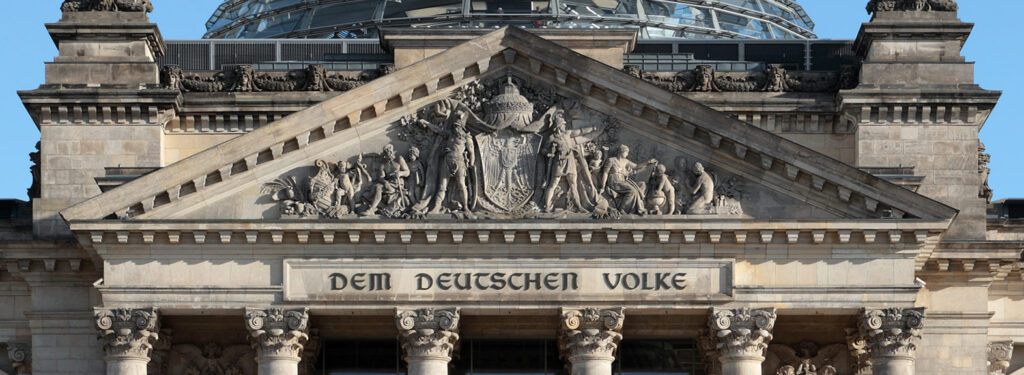
“In the Reichstag building, the words ‘DER BEVÖLKERUNG’ (To the Population) shine brightly in white illuminated letters in the northern atrium. The letters, approximately one meter high and lying on the ground along the longitudinal axis of the atrium, can be read from west to east from the plenary chamber of the Bundestag. Visitors on the roof of the building are also able to see them from the depths of the atrium. The inscription ‘DEM DEUTSCHEN VOLKE’ (To the German People) in the front gable of the Reichstag building serves as the model for the lettering.”
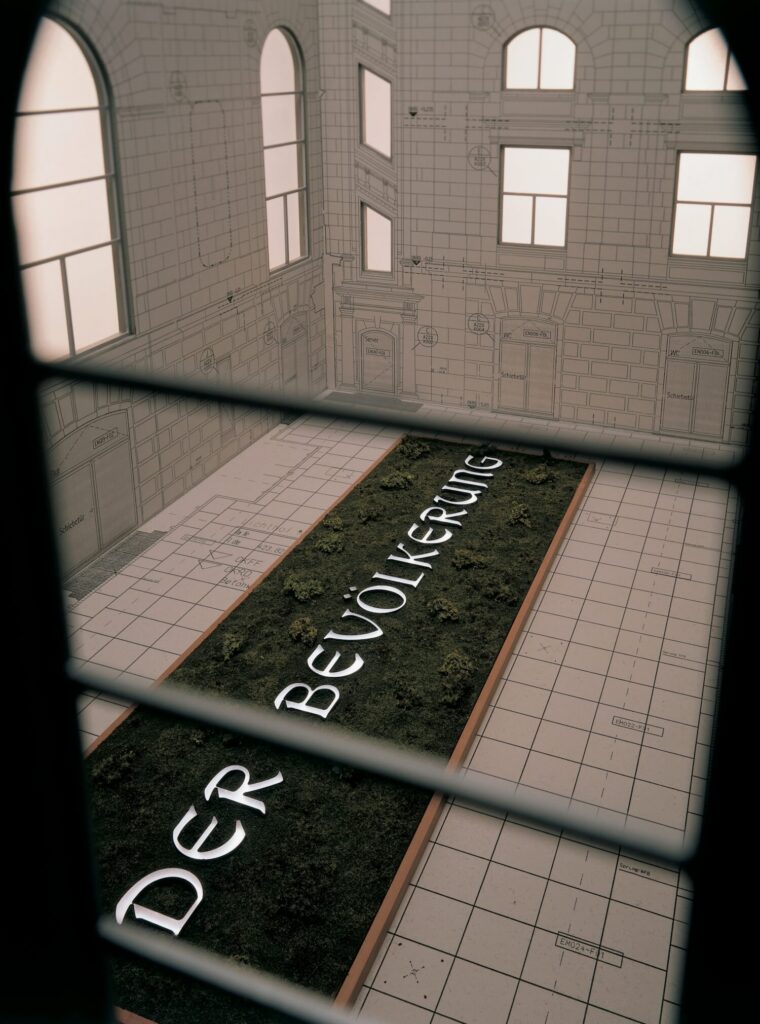
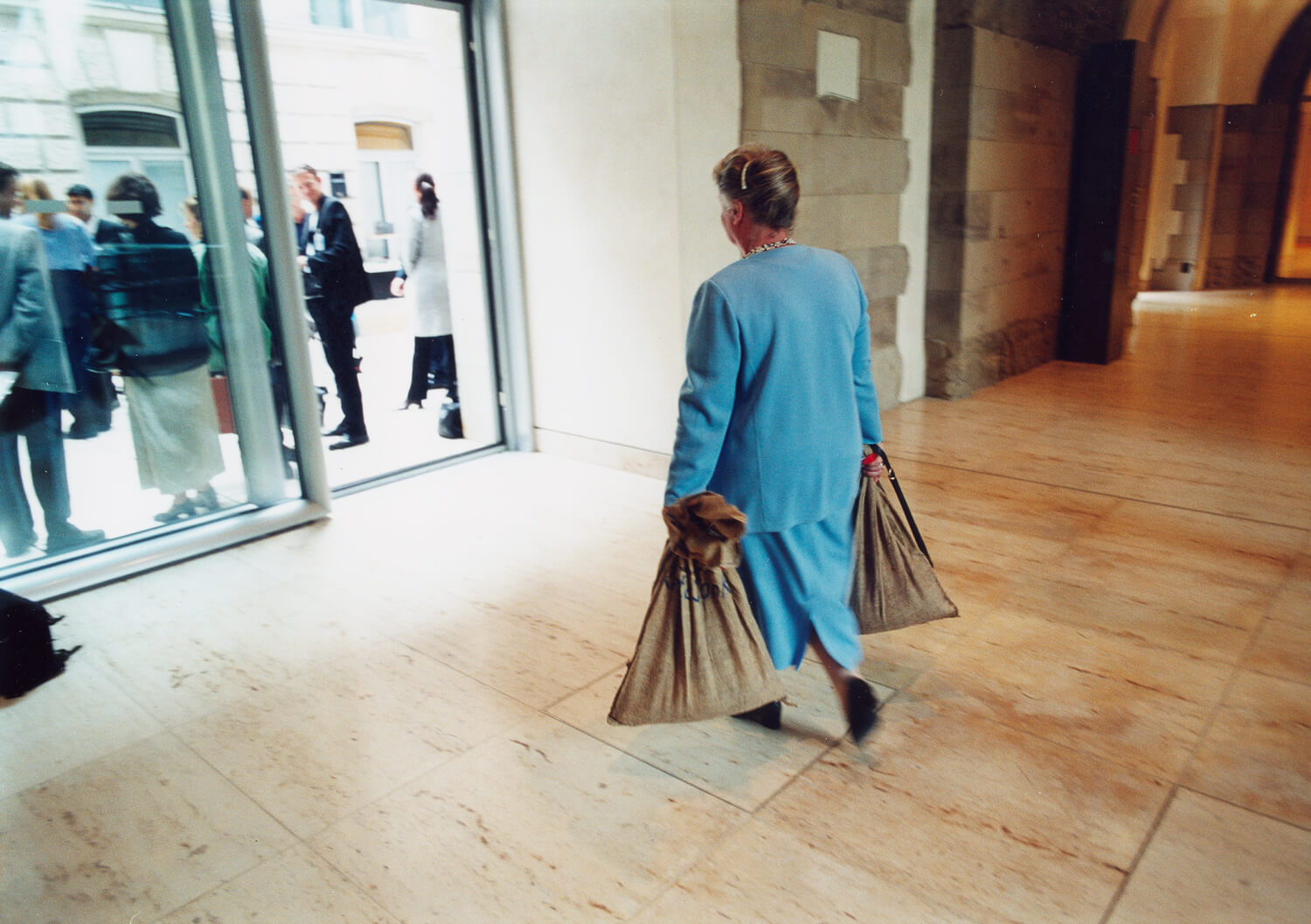
All members of the Bundestag are invited to bring 100 kg of soil from their constituencies or the states in which they were elected as list candidates to the atrium. This soil, originating from 669 different regions of the Federal Republic, will be scattered around the illuminated letters in a wooden frame.
Seeds and roots from their respective places of origin, as well as windblown seeds, are naturally embedded in the soil brought to Berlin. They are intended to grow freely, without horticultural intervention. When members of parliament leave office, a quantity of soil corresponding to their contribution may be removed if the limited capacity necessitates it.
Newly elected members of parliament are also invited to contribute to the soil volume and thus to the vegetation in the atrium. The growth process and the addition and occasional removal of soil, corresponding to the rhythm of legislative periods, will continue as long as democratically elected representatives of the people convene in the Reichstag building.
To ensure maximum public visibility, information from participants and their contributions to the soil project, along with a current photograph of the courtyard, will be made available on a dedicated website. A static camera with an ISDN connection, pointed directly at the courtyard, is programmed to take a picture every two hours and display the image taken at noon on the website, which is updated daily. This creates a constantly growing image archive in a database supporting the website, allowing users to follow the changes in the courtyard in a kind of time-lapse. Members of parliament who have contributed to the soil project in the courtyard will be given the opportunity to present their own texts and images via a link on the website.
Text: Hans Haacke, Project description 1999 (excerpt)
Debate and Decision
When the German Bundestag invited Hans Haacke to develop an art-in-architecture project for the northern atrium of the renovated Reichstag, no one suspected what political dynamics the concept would unleash.
On November 2, 1999, Haacke and his project partner Oliver Schwarz presented their model for TO THE POPULATION to the art advisory board – and received clear approval: nine votes in favor, one against. But that one dissenting vote had consequences.
Volker Kauder, the only member of the advisory board to vote against the project, leaked his objection and the draft documents to the press. This sparked a public debate about the supposedly provocative aspects of the project. Suddenly, a work of art was at the center of a discussion about democracy in practice, symbolic politics, and the limits of artistic freedom.
The pressure grew so intense that the Council of Elders demanded another vote in the Arts Advisory Board. On January 25, 2000, the board reaffirmed Haacke’s concept with a clear majority. Kauder then organized resistance in parliament: 178 members of the CDU/CSU parliamentary group submitted a joint motion to halt the project, which had already been approved twice (document 14/2867).
The matter had thus become definitively political. The Council of Elders scheduled a Bundestag debate with a roll-call vote for April 5, 2000. For the population, this unforeseen escalation had long since become more than just a draft proposal: it had become a litmus test of parliamentary culture.